 Zephyrhills Golf Cart Repair
 Golf Cart Battery Replacement in Zephyrhills
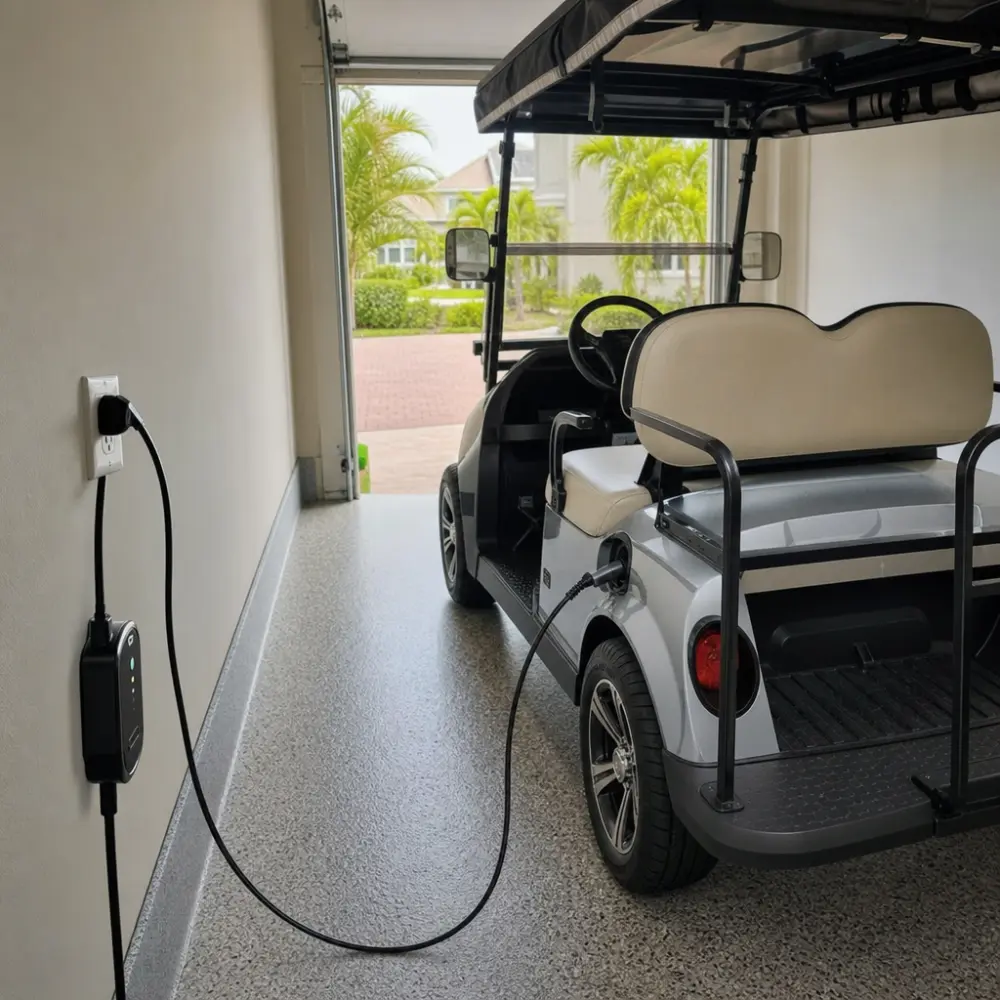
A full lead-acid pack installed runs $1,200 to $1,800, a lithium conversion $1,600 to $3,500, both including haul-away of the old batteries. The harder part is knowing which one your cart actually needs, since a corroded cable or a failing charger can mimic a dead pack closely enough to fool an owner into buying batteries that were never the problem.
Confirming it is really the pack
Range that keeps shrinking, a charger that runs longer than it used to without finishing sooner, and a cart that sags at the end of a run are the three classic signs. None of them alone is proof. A load test puts a real current draw on each individual battery and records how far the voltage falls, and a hydrometer reading on a flooded pack checks specific gravity cell by cell. That combination is what tells a technician whether the whole pack is done or just one or two batteries are dragging the rest down, which matters because replacing a single battery on a pack under roughly two years old is often the right call, while doing the same on an older pack rarely pays off.
Lead-acid replacement
| Pack | Installed price |
|---|---|
| 36V (six 6V batteries) | $1,200 to $1,600 |
| 48V (six 8V or four 12V), premium brands like Trojan | up to $1,800 |
Installation includes cable and terminal inspection with anti-corrosion coating, a full watering, hold-down torque, and a test drive. Heat is the enemy of a flooded pack here: the nearest NOAA station with full temperature normals, Saint Leo about 8 miles northwest, logs 114.2 days a year at 90°F or above, and that heat evaporates electrolyte out of the cells faster than a watering schedule built for a cooler climate assumes. Once the plates are exposed above the fluid line, they sulfate and lose capacity for good.
Lithium conversion
| Pack | Installed price |
|---|---|
| Entry 48V, 50 to 60Ah | $1,600 to $2,200 |
| 100Ah and up | $2,500 to $3,500 |
A lithium conversion includes a lithium-specific charger, since a lead-acid charger profile will not properly charge a LiFePO4 pack. The trade is a higher upfront cost for 7 to 10 or more years of life, zero watering, lighter weight, faster charging, and steady power all the way to the last mile instead of sagging near empty. For a cart running daily laps inside the Villages of Pasadena Hills or a local 55+ community, that math tends to favor lithium; for a cart that goes out a couple of times a week, a quality lead-acid pack at $1,200 to $1,800 usually wins instead. The battery cost calculator runs both numbers side by side.
What shortens a pack’s life around Zephyrhills
Beyond heat, the wet season adds its own wear: the precipitation station inside Zephyrhills logs about 62 percent of its 55.96-inch annual rainfall, 34.59 inches, between June and September, long enough for a closed garage to stay damp and corrode terminals that then read as a weak pack under a voltage-drop test. Storm season adds a third factor; Hurricane Milton’s October 2024 pass left parts of Pasco County with floodwater for months afterward, and a battery compartment that took on water needs inspecting before it gets charged again.
After the new pack goes in
Water flooded batteries every two to four weeks from roughly May through September and every six to eight weeks the rest of the year, using distilled water and filling only after a full charge. Recharge fully after every use rather than leaving a pack to sit partially charged, since partial-charge storage sulfates the plates on its own schedule regardless of use. The tune-up service page folds all of that into one seasonal visit, and the range dropping page covers how to tell early pack fade from a cheaper fault.
Frequently Asked Questions
How much is a full battery pack installed?
Lead-acid packs run $1,200 to $1,800 installed: 36V six-battery packs from about $1,200 to $1,600, 48V packs up to about $1,800 with premium brands like Trojan. That includes installation, cable and terminal service, a full watering, and haul-away of the old cores.
How do I know the pack is actually done?
Shrinking range, a charger that runs longer than it used to, and sag at the end of a run. A load test on each battery, plus a hydrometer reading on flooded packs, confirms it rather than guessing from symptoms alone. Often one or two bad batteries are dragging down the rest.
How long will a pack last around Zephyrhills?
Lead-acid runs roughly 4 to 6 years elsewhere, and heat pushes it toward the short end here. The nearest NOAA station with full temperature normals, Saint Leo, logs 114.2 days a year at 90°F or above. Watering every two to four weeks in summer and full recharges after each use push a pack toward the long end.
Is lithium worth it here?
For a daily-driver cart, often yes: 7 to 10 or more years of life, no watering, faster charging, and steady power through the last mile, at $1,600 to $3,500 installed. For a cart that goes out a couple of times a week, quality lead-acid usually wins the math.
What happens to my old batteries?
They leave with the technician for recycling. Lead cores have scrap value, so there is no disposal fee and nothing heavy left behind in your garage.